Load
How we test load
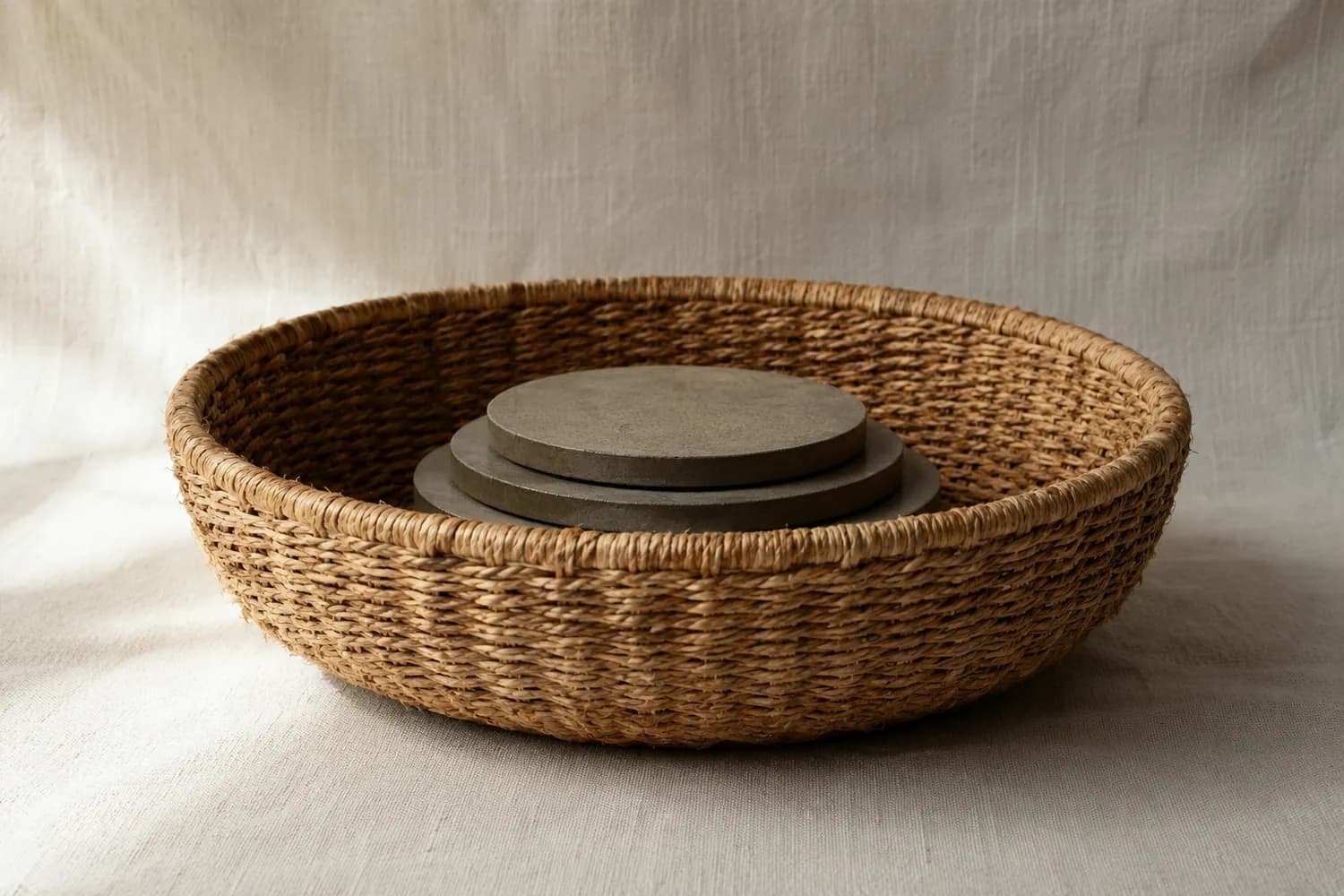
The short version
Static weight. Spread evenly. Held for 24 hours. Measured before and after. If a piece deformed permanently, the figure came down until it did not.
1. The method
- Static, not dynamic. The weight is placed in, not dropped in. A basket that holds 8 kg standing still will not necessarily survive 8 kg thrown in from a metre up.
- Evenly distributed. Flat weights spread across the whole base. A single dense object in one corner concentrates the load and is a harder test than the figure covers.
- Held for 24 hours. Fibre creeps. A basket that looks fine for five minutes can be visibly deformed the next morning, and that is the failure we are trying to catch.
- In the position it is sold for. Floor baskets on a flat floor. Shelf baskets on a shelf. Wall pieces hung on a wall anchor rated for at least 10 kg. Hanging pieces on their own cords from a ceiling hook rated for at least 10 kg. The condition is printed next to the figure on every product page.
- Measured before and after. Outer diameter, inner diameter, height, rim shape. Then the piece is emptied and measured again after 48 hours at rest.
- The figure is the last weight that recovered. If a piece did not return to within 2 % of its starting dimensions, the weight came down and the test ran again on a fresh piece.
2. What the number is not
- Not a safety rating. It is a measurement we took, not a certification anyone issued.
- Not a guarantee. Natural fibre varies between pieces. Treat the figure as the sensible working maximum, not a target.
- Not a carrying figure for wall pieces. The wall anchor is the weak point, and we did not supply your wall. See section 4.
- Not valid when damp. Wet fibre is weaker and takes a permanent set far more readily. Every figure assumes a dry piece in a dry state.
- Not a floor figure for sets. Where a product is a set, the published figure belongs to the largest piece, and the page lists the others separately.
3. Why we do not publish a load for some things
We do not sell anything without a tested figure. A piece missing either the load figure or its test condition does not appear in this shop at all — the site is built so that such an item cannot render. Decorative wall pieces carry their own weight as the figure, and their pages say plainly that they are not shelves and hold nothing.
4. Wall and hanging pieces
Our figure describes the piece, not your wall. Plasterboard, brick, concrete, tile and timber all need different fixings, and the fixing is what fails first.
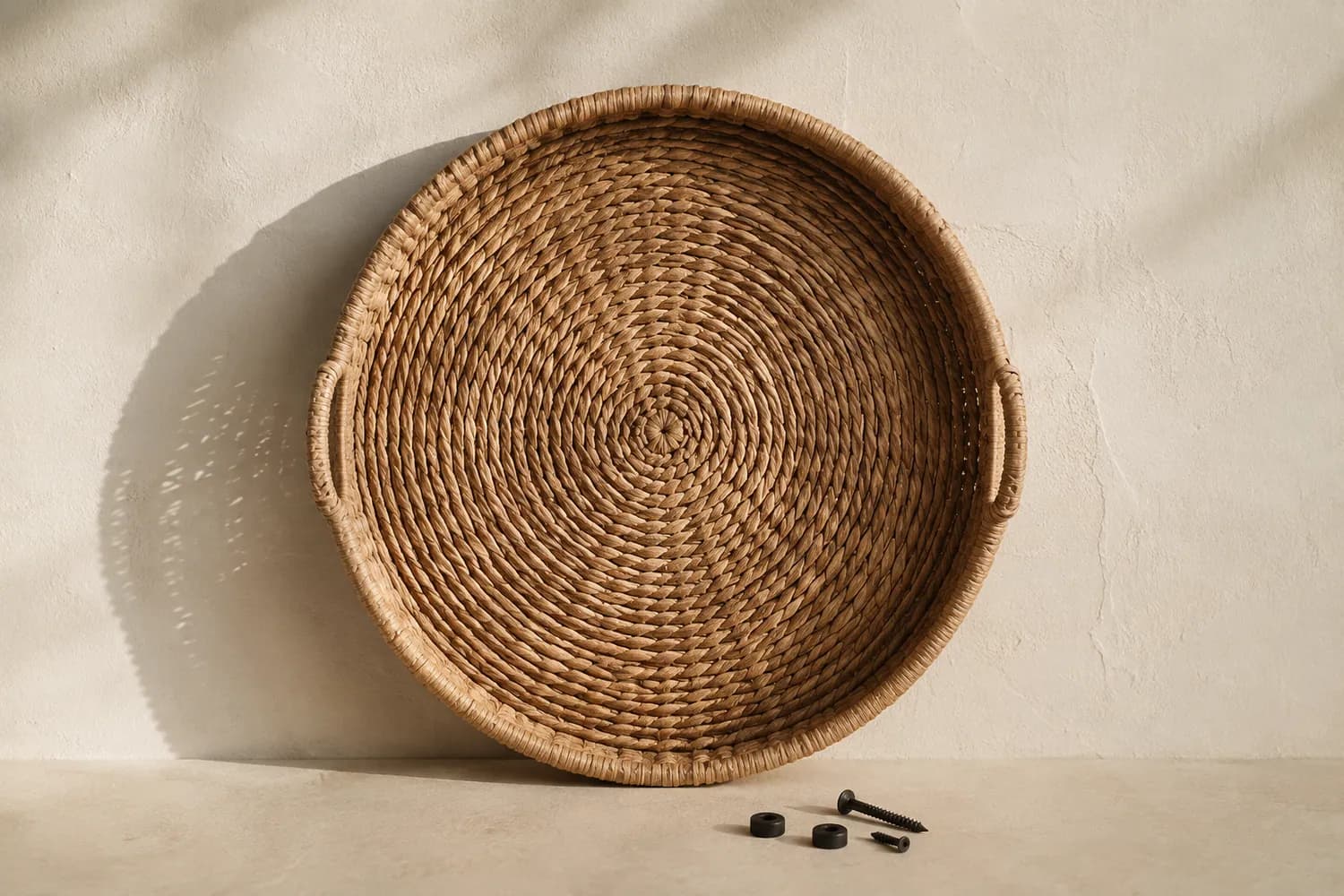
- Anchors, screws and plugs are never included. Every wall piece says so on its page and again in your basket.
- Use a fixing rated for at least five times the weight you intend to put in the piece, in sound material.
- Check the fixing after the first week, and then twice a year.
- Do not hang anything above a cot, a bed or a place where someone sits.
We accept no liability for a fixing we did not supply or install. That is not a disclaimer we are hiding — it is why the anchors are not in the box.
5. The current figures
Highest tested loads
Lightest tested loads
All 44 pieces publish a figure. The Fit Finder uses them directly: pick a weight band and it only returns pieces measured at or above the top of that band, so nothing comes back that would be working at its limit.
6. Inner diameter matters as much as load
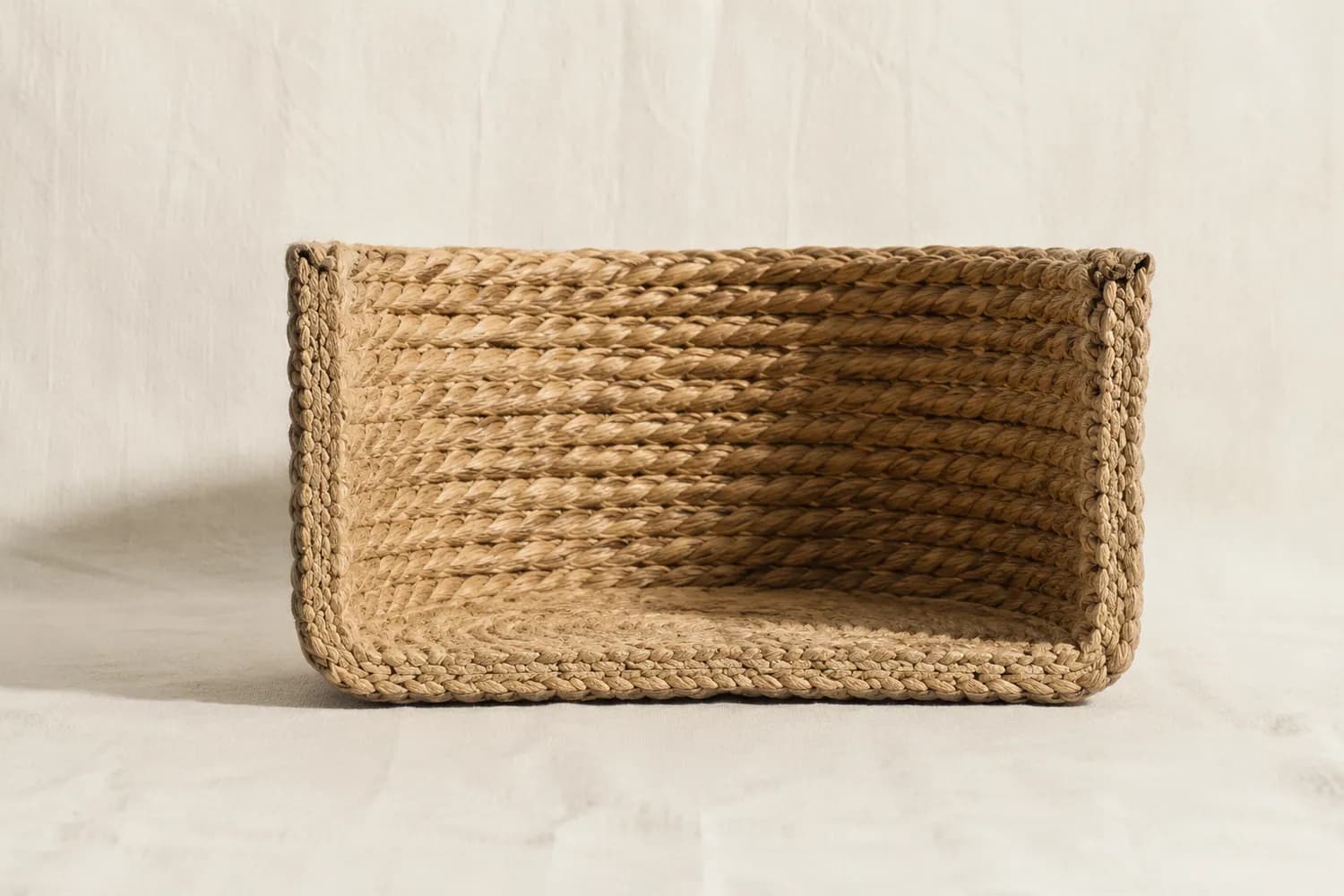
A woven wall is 12 to 20 mm thick. On a Ø25 basket that is most of 30 mm of internal space gone, which is the difference between a stack of A4 fitting and not fitting. We publish the inner figure on every page, in bold, and it is the one to measure against.
7. Questions about a specific figure
If you want to know how a piece behaved at a weight we did not publish, ask. We will tell you what we measured rather than estimate. Email support@studiohafnia.mom, or send the measurements of your space through storage advice.